The custom labels mistakes that cause reprints on a first order are predictable: a size taken from the artwork instead of the container, a material that fails in the fridge or shower, low-resolution logos, the wrong roll direction and a rushed proof. Custom Labels Co. sends a free mockup within 24 hours, and that proof is where you catch every one.
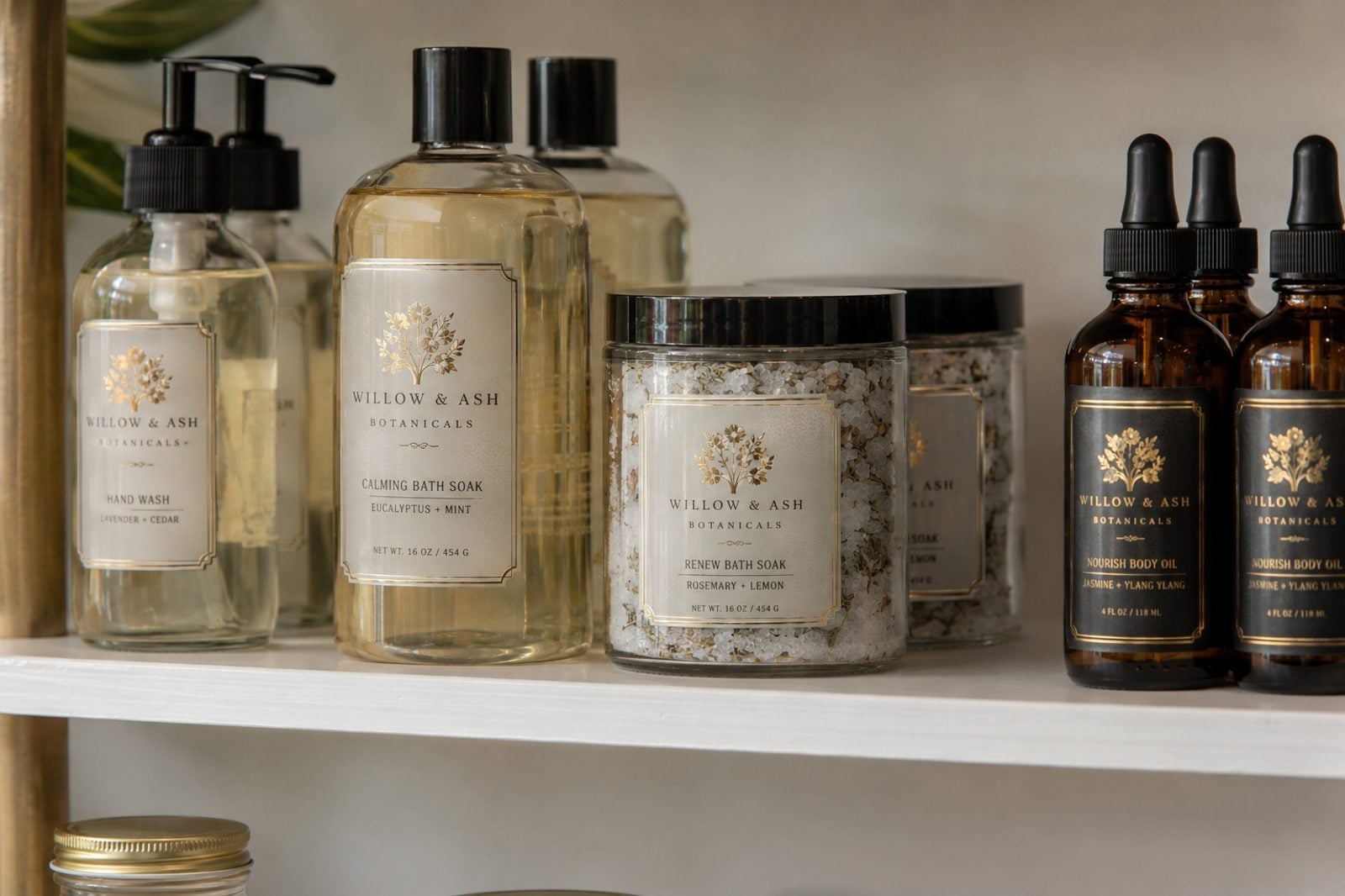
- Measure the real, filled container before choosing a label size
- Match the material to where the product lives: shelf, fridge or shower
- Free mockup within 24 hours with unlimited free revisions
- Minimum order of 12, so small test runs are practical
- Standard turnaround about 2 weeks after approval
What are the most common mistakes on a first custom labels order?
The most common mistakes on a first custom labels order are sizing the label to a guess instead of the real container, approving a mockup without checking the small print, choosing a material that does not match where the product lives, and specifying the wrong roll direction for the way the labels will be applied. Each one is easy to prevent before you approve the design.
First-time buyers tend to focus on the logo and the colors, because those are the fun parts. The problems that actually cause reprints sit in the less exciting details: the curve of a jar shoulder, a lot code that needs a blank area, a fridge that turns paper soft, or a hand-applied roll that unwinds upside down. Custom Labels Co. reviews every order with a free mockup within 24 hours, and that proof is your best moment to catch these issues.
The sections below walk through each mistake in the order it usually happens, from measuring the container to planning the next run, so you can treat this as a checklist before you send artwork.
Why do labels that fit the artwork file fail to fit the container?
Labels fail to fit the container when the size comes from the design file or a competitor’s product rather than from the actual bottle, jar, pouch or box you will fill. Containers have tapers, seams, raised shoulders and embossed bases that shrink the flat area a label can safely cover, and those details rarely show up in a supplier’s spec sheet.
Before you request a quote, take the real container and measure the smooth, flat panel where the label will sit. Wrap a strip of paper around a round bottle to see where the curve starts to change. On tapered jars, a straight rectangle can wrinkle at one edge, so a narrower label or a slightly curved shape often looks cleaner.
- Measure the filled container, not an empty sample from a different supplier.
- Leave clearance from seams, ridges and the cap line.
- Test with a paper mock-up printed at actual size and taped in place.
- Check the shape: rounded corners peel less than sharp corners on curved surfaces.
If you are unsure, send Custom Labels Co. a photo of the container with your quote request. The team can suggest a size and shape on the mockup before anything prints.
How do I pick a label material that will not fail where my product lives?
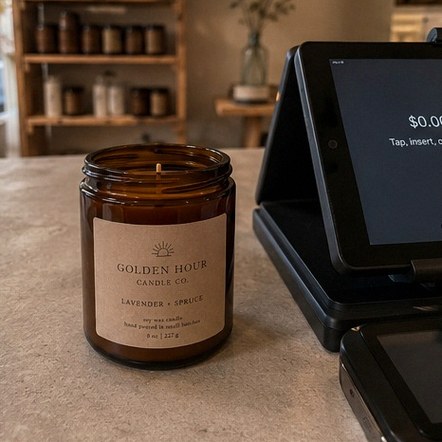
Pick the label material by asking where the product spends its life: on a dry shelf, in a cooler full of ice, in a steamy bathroom, or in a hand that is coated in oil or lotion. Paper suits dry goods with a natural look, while BOPP film holds up to water, condensation and handling far better.
A frequent first-order mistake is choosing kraft or uncoated paper for a beverage, sauce or body product because it looks artisan in the mockup. The label looks perfect on launch day and scuffed or wrinkled a few weeks later. If your product gets chilled, washed, squeezed or wiped, look at BOPP roll labels or waterproof bottle labels first.
| Where the product lives | Material to consider | Mistake to avoid |
|---|---|---|
| Dry shelf, gift box, coffee bag | Kraft paper or white paper | Using film when a natural feel is the point |
| Fridge, cooler, ice bucket | White or clear BOPP | Uncoated paper that softens with condensation |
| Shower, bath, kitchen sink | Waterproof BOPP | Paper labels near oils and soaps |
| Glass bottles with a no-label look | Clear BOPP | Forgetting white ink behind light colors |
Adhesive matters too. A label that grips a smooth glass bottle may lift on a textured pouch or a frosted jar, so tell Custom Labels Co. the surface when you ask for a quote.
What artwork problems show up most often on custom labels?
The artwork problems that show up most often on custom labels are low-resolution logos, text placed too close to the cut line, colors set up for screens instead of print, and missing white ink behind designs on clear film. Each one looks fine on a monitor and only shows up once the label is printed and cut.
Logos pulled from a website or social profile are usually too small to print sharply. Send a vector file or the largest original you have. Keep important text and barcodes comfortably inside the edge of the label, because the die cut has a small tolerance and anything right at the border can get trimmed. Background color or images should run past the edge so no thin white line appears after cutting.
Color is the other surprise. Screens glow and paper does not, so bright greens and electric blues often print a little calmer. If you need a specific brand color, say so, and include any color references you already use on packaging.
Clear labels need extra care. Without a white layer underneath, light colors and white text simply disappear on a dark bottle. Ask for white ink where you need opacity. For a deeper walkthrough of files, see the artwork and dielines guide on the Custom Labels Co. blog.
What should I check on the mockup before approving labels?
Before approving labels, check the mockup for spelling, legal and regulatory text, barcode placement, the exact size and shape, the material and finish noted on the proof, and whether every required version is included. Approval is the point where a mistake becomes printed inventory, so read the proof slowly and out loud.
Custom Labels Co. sends a free mockup within 24 hours and offers unlimited free revisions, and you pay nothing until you approve the design. Use that window. Print the proof at actual size, cut it out and hold it against the container. Ask a second person to read every word, especially ingredient lists, net contents, warnings and contact details.
- Confirm the label size and shape match your measurements.
- Read every line of text, including the tiny print.
- Check that barcodes sit on a flat area with a light background.
- Confirm material, finish and any foil or white ink callouts.
- Confirm every flavor, scent or SKU version is on the proof.
- Confirm roll direction or sheet layout for how you will apply them.
If anything feels off, ask for a revision. Changing a mockup costs you nothing; changing a printed run means waiting for new labels.
Does roll direction really matter for custom labels?
Roll direction matters for custom labels whenever you apply them with a hand-held dispenser or a labeling machine. Labels on a roll can come off the core head first, foot first, or sideways, and the wrong orientation means every label goes on upside down or needs to be rotated by hand, which slows down packing.
Machine applicators are the strictest. They also care about core size and the outside diameter of the finished roll, so check your equipment manual or ask whoever runs the line before you order. Hand application is more forgiving, but a consistent unwind direction still saves time when you are labeling a full batch.
If you apply labels by hand in small batches, sheet labels can be easier: you see the whole design, peel one at a time, and do not need to think about unwind direction at all. Higher volume and machine application usually point toward roll labels. Tell Custom Labels Co. how the labels will be applied, and the mockup will note the orientation.
How do I avoid ordering the wrong mix of label versions?
Avoid the wrong mix of label versions by listing every flavor, scent, size and SKU before you request a quote, then deciding which ones truly need separate labels. First orders often skip a variant, or print one design for every product when the shelf really needed distinct colors to tell them apart.
Make a simple table with one row per version: product name, container, label size, and the text that changes. That table makes the quote accurate and keeps the mockup complete. It also reveals where a shared base label with a small variant sticker could work, which can simplify reorders later.
Think about lot codes and dates too. If you stamp or write batch information by hand, leave a blank area on the design that will take ink, and mention it so the finish is chosen with that in mind. Glossy laminates can smear some markers, while a matte finish usually takes a pen more easily.
Custom labels start at a minimum order of 12, so a small test of a new variant is realistic. Run a short batch, see how it performs on the shelf, and then scale up.
How can I plan the timeline so labels do not hold up a launch?
Plan the timeline by working backward from the day you need filled, labeled products, not the day you need labels in hand. Standard production at Custom Labels Co. is about 2 weeks after you approve the mockup, with faster turnaround available through express shipping, so the approval date is the one to protect.
The common mistake is finishing artwork late, approving in a hurry, and then discovering the label does not fit or the text has an error. Build in time for a revision or two, for testing a printed sample on the real container, and for applying labels to your full batch once they arrive.
Another easy win is ordering the next run before the current one runs low. Keep your approved artwork files, the final size and material, and the roll direction in one place so a reorder is a quick confirmation instead of a fresh project. When you are ready to start, request a custom quote or review how it works to see each step from mockup to delivery.
Frequently asked questions
What is the most common mistake on a first custom labels order?
The most common mistake on a first custom labels order is choosing a size from the artwork file instead of measuring the real container. Tapers, seams and raised shoulders reduce the flat area a label can cover, so a label that looked right on screen can wrinkle or overhang. Measure the filled container, test a paper cutout at actual size, and share a photo with Custom Labels Co. before approving.
Why do custom labels sometimes peel at the corners?
Custom labels usually peel at the corners when sharp corners sit on a curved surface, when the adhesive does not suit the container, or when labels go onto a cold, damp or oily surface. Rounded corners, a material matched to the conditions and clean, dry containers solve most lifting. Tell Custom Labels Co. the container surface and storage conditions so the mockup reflects the right choice.
How do I measure a container for custom labels?
Measuring a container for custom labels starts with the smooth, flat panel where the label will sit. Use a flexible tape or paper strip on the filled container, note where curves, seams or the cap line begin, and leave clearance from each. Print a paper version at actual size and tape it on to confirm the fit before you request a quote.
Can I use a logo from my website on custom labels?
A logo saved from a website usually prints soft on custom labels because web images are small and compressed. Send a vector file such as AI, EPS, SVG or a vector PDF, or the largest original image you have. Custom Labels Co. will flag low-resolution artwork on the free mockup, so you can supply a better file before anything is printed.
Why do printed label colors look different from my screen?
Printed label colors look different from a screen because monitors emit light while labels reflect it, so very bright greens, blues and oranges often print a little calmer. Material changes color too: kraft paper warms tones and clear film lets the container show through. Share any brand color references with your artwork so custom labels match existing packaging as closely as possible.
Should I order custom labels before my packaging is final?
Ordering custom labels before packaging is final is risky, because a change of jar, bottle or pouch can make the label size or adhesive wrong. Lock the container first, then measure and order. If timing is tight, a small run at the minimum of 12 lets you test labels on the final container before committing to a larger order.
How do I make sure small text on labels is readable?
Small text on labels stays readable when it sits on a high-contrast background, away from the cut edge, and in a simple font without thin hairlines. Print the mockup at actual size and read it at arm's length. Ingredient lists and warnings deserve the most attention, and Custom Labels Co. can adjust layout on the mockup before you approve.
Can one custom labels order include several designs?
One custom labels order can include several designs, such as different flavors, scents or product sizes. List every version with its text, size and container when you request a quote so the mockup covers them all. Checking that every variant appears on the proof is one of the simplest ways to avoid a missing SKU after the order arrives.
Why does white ink matter on clear labels?
White ink matters on clear labels because clear film has no background of its own, so light colors and white text vanish against a dark or colored container. A white layer printed behind the design keeps those areas solid and readable. Ask Custom Labels Co. for white ink wherever you need opacity, and check the callout on your mockup.
Which roll direction should I choose for custom roll labels?
The roll direction for custom roll labels depends on how you apply them. Labeling machines need a specific unwind direction and core size, so check the equipment manual first. Hand dispensers are more forgiving but still benefit from a consistent orientation. Tell Custom Labels Co. your application method and the mockup will note the unwind direction before printing.
Can I write lot codes or dates on custom labels by hand?
Custom labels can take handwritten lot codes or dates if you leave a clear blank area and choose a finish that accepts ink. Matte surfaces usually take a pen or marker better than gloss laminate, which can smear. Mention hand-written batch information when requesting a quote so Custom Labels Co. can suggest a suitable material and finish.
Get a free mockup for your labels
Send your logo or idea and the quantity you have in mind. Custom Labels Co. returns a free mockup within 24 hours, you approve the design before anything is produced, and standard turnaround is about two weeks with faster options available. Get a custom quote.