Holiday custom labels go smoothly when you order as soon as seasonal products are final, keep your everyday label size, and pick a material that suits gifting and cold storage. Custom Labels Co. sends a free mockup within 24 hours and ships in about 2 weeks after approval, so planning backward from your selling date keeps labels off the critical path.
- Free mockup within 24 hours with unlimited free revisions
- Standard turnaround about 2 weeks after approval, faster with express shipping
- Minimum order of 12, so new holiday products can start small
- Keep the everyday die size so seasonal labels fit the same containers
- Pay nothing until you approve the design
When should you order custom labels for holiday products?
Order custom labels for holiday products as soon as your seasonal recipes, scents or gift set contents are final, and work backward from the day the finished product must be on a shelf or in a box. Custom Labels Co. returns a free mockup within 24 hours, and standard turnaround is about 2 weeks after you approve the design, so the real constraint is usually how long your own team takes to decide.
The holiday window from mid-October through December compresses everything. Makers fill and pack more units than usual, craft fairs and holiday markets stack up on weekends, and wholesale accounts want stock early so it sells before the season ends. Labels are often the last component anyone thinks about, which is why they end up on the critical path.
A simple way to plan is to list every date that matters and count backward:
- Selling date: the first market, launch email or wholesale delivery.
- Packing time: how long it takes your team to fill, label and box the run.
- Production and shipping: about 2 weeks of standard turnaround, with faster turnaround available through express shipping.
- Proofing: the 24-hour mockup plus however many revision rounds you need.
- Artwork: the days your designer needs to finish holiday versions.
If the count lands in the past, you still have options, but you will lean on express shipping and fewer revision rounds.
How do you plan seasonal label designs alongside your everyday labels?
Plan seasonal label designs as variations of your everyday labels, not as a new brand. Keep the same die size, the same material and the same information layout, and change only the artwork, the product name and any holiday flavor or scent details. That approach lets the seasonal labels run on your existing filling and labeling process without a single change on the packing table.
Keeping the die size consistent matters more than most brands expect. A holiday label that is slightly taller or wider than your standard one may not fit the flat panel on your jar, tin or bottle, and a hand applicator or roll setup tuned for the regular label will need adjusting. When the shape and size match, the seasonal version drops straight into your routine.
Inside that fixed frame you have plenty of room for festive design:
- Swap the background color to a deep green, burgundy or winter white while keeping your logo placement.
- Add a small seasonal illustration in the space usually used for a tagline.
- Rename the product for the season, such as a winter blend or a limited holiday scent.
- Keep ingredients, net contents, warnings and barcodes exactly where shoppers and retailers expect to find them.
Custom Labels Co. can show your everyday label and the seasonal version side by side on the mockup, which makes it easy to confirm the family resemblance.
Which label materials and finishes suit holiday packaging?
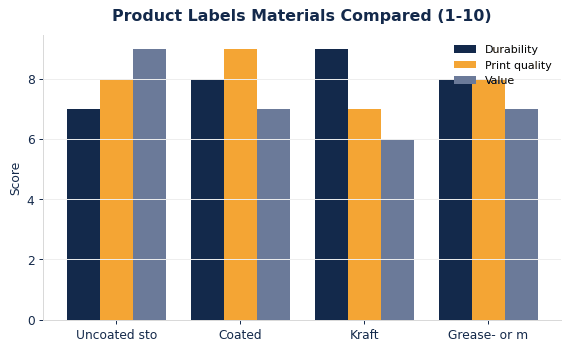
The best label materials for holiday packaging depend on the look you want and where the product will live. Foil-stamped labels deliver the classic gold or silver gift look, kraft paper labels suit rustic and handmade goods, clear BOPP labels let a colorful product show through, and white BOPP holds up on anything that sees cold, condensation or handling.
| Material or finish | Holiday look | Best for |
|---|---|---|
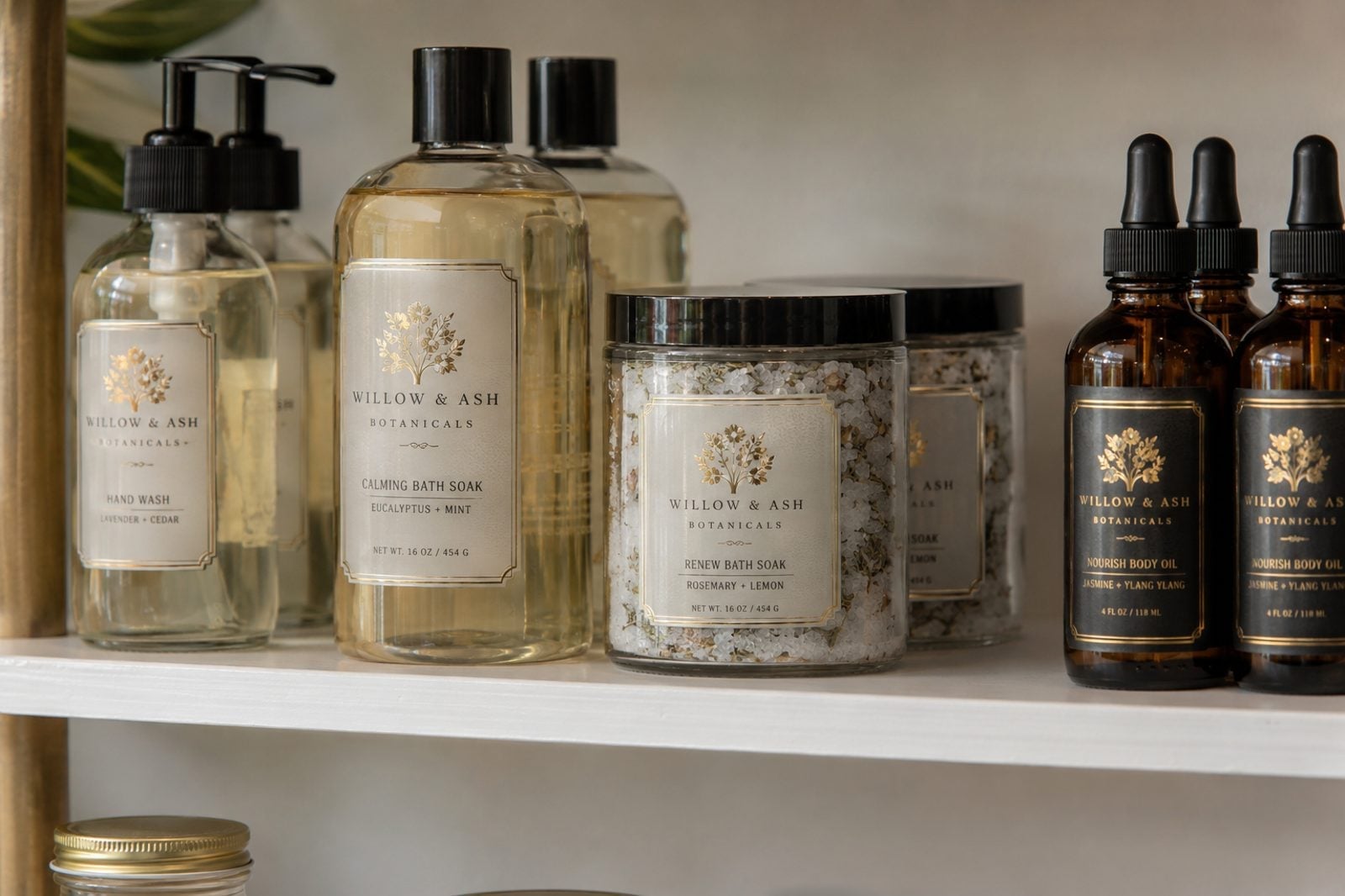
| Foil-stamped labels | Metallic accents that catch light under store and market lighting | Gift sets, premium candles, limited editions |
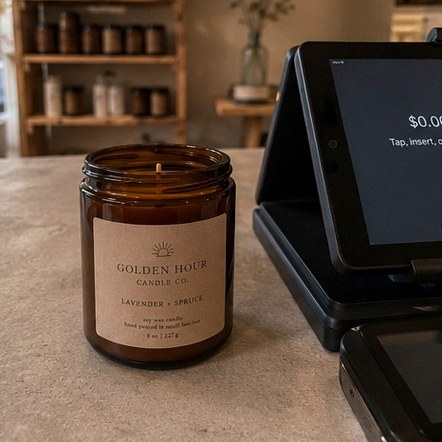
| Kraft paper labels | Warm, natural and handmade | Baked goods, soaps, small-batch pantry items |
| Clear BOPP labels | No-label look that shows the product | Glass jars of syrup, jam, bath salts and infused oils |
| White BOPP roll labels | Bright, full-color seasonal artwork | Bottles, pouches and anything chilled or handled often |
Think about conditions as well as appearance. Holiday beverages and food gifts often travel in coolers or sit in refrigerators, and paper can soften when it gets damp, so BOPP is the safer choice there. Candles and dry goods on a shelf can use paper or kraft without trouble. If you are unsure, ask Custom Labels Co. to show two material options on the mockup before you approve.
How many holiday labels should you order for a limited run?
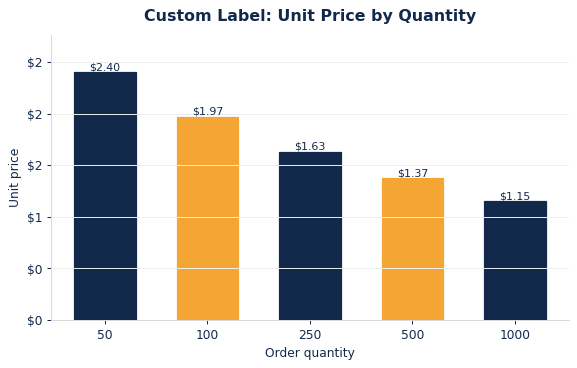
Order holiday labels to match your realistic seasonal sell-through plus a small cushion for application mistakes, rather than matching your everyday volume. Seasonal labels lose their value in January, so leftovers are harder to use than leftover standard labels. The minimum order at Custom Labels Co. is 12, which makes small test quantities practical for a new holiday product.
A sensible way to size a seasonal order is to start from last year’s holiday sales if you have them, then adjust for new wholesale accounts, new markets and any gift sets you are adding. If the product is brand new, order a modest first run and keep your approved artwork ready for a reorder. Because a reorder uses the same approved design, the second run moves faster than the first.
A few habits keep seasonal waste down:
- Leave the year off the label unless it truly adds value, so leftovers can be used next season.
- Use a generic winter theme instead of a single holiday when you sell to a broad audience.
- Keep the product name the same as your everyday version and add a seasonal edition line instead.
- Order the core gift set labels first and the add-on items once you see early sales.
What should go on a gift set or bundle label?
A gift set or bundle label should name the set, list what is inside, and carry any information each individual product already needs, such as ingredients, warnings or net contents. The outer box or wrap label is about presentation and contents, while each item inside should still be labeled as it would be on its own shelf.
Gift sets often combine products that were never designed to sit together, like a candle, a hand cream and a small jar of sugar scrub. A matching set of labels in one seasonal design ties them together visually, and a single outer label explains the bundle. Many brands use a foil-stamped label on the box lid and simpler matching labels on each item.
Useful elements for a gift set label include:
- The set name and your brand name, large enough to read across a market table.
- A short list of included items so the buyer knows what they are giving.
- A blank area or a small to and from line for a handwritten note.
- A barcode if the set is sold through a retailer as its own item.
- Your website or a QR code that points to reorder or gifting information.
Send all of these pieces in one request, and Custom Labels Co. can mock up the outer label and the item labels together so the family looks consistent.
What is the fastest way to get holiday labels approved and printed?
The fastest way to get holiday labels printed is to send complete, print-ready artwork with exact sizes, quantities and material choices in a single quote request, then review the mockup the same day it arrives. Custom Labels Co. sends a free mockup within 24 hours, offers unlimited free revisions, and you pay nothing until you approve the design.
Most seasonal delays happen in the back-and-forth, not in production. A missing size, an unclear material, or a decision that needs three people to sign off can add days before the 2-week production window even starts. Gather the right people before you send artwork, and agree on who gives the final approval.
- Confirm the label size from your actual containers, not from last year’s file.
- Choose the material and any foil or finish before requesting the quote.
- Send vector logos and final copy, with ingredients and warnings proofread.
- List every holiday design and its quantity in the same request.
- Approve the mockup quickly, or send all revision notes in one round.
- Ask about express shipping if your selling date is close.
Once approved, your artwork stays on file, so a mid-season reorder for a best seller does not start from scratch.
Which holiday labeling mistakes are worth avoiding this season?
The holiday labeling mistakes worth avoiding are ordering too late, changing the label size for the season, choosing paper for chilled gifts, and printing a specific year that makes leftovers unusable. Each one is easy to prevent during planning, and each one costs more to fix once the season is underway.
Other common slip-ups include red text on a dark green background that becomes hard to read under market tents, foil applied to very thin type where fine detail can get lost, and forgetting to update the barcode when a holiday bundle is sold as a new item. Check every seasonal label at arm’s length on a printed mockup, and compare it with your everyday version for readability.
Custom Labels Co. reviews your files when preparing the mockup, so use that proof as your final quality check. When you are ready, request a quote with your holiday designs, sizes and target dates, and plan the season around a label that arrives on time.
Frequently asked questions
How far ahead should I order custom labels for the holiday season?
Custom labels for the holiday season should be ordered as soon as your seasonal products are final. Custom Labels Co. sends a free mockup within 24 hours, and standard turnaround is about 2 weeks after you approve. Add time for your own design decisions and packing, then count backward from your first market, launch email or wholesale delivery date.
Can holiday labels use the same size as my everyday labels?
Holiday labels can and usually should use the same size and shape as your everyday labels. Keeping the die size consistent means the seasonal version fits the same flat panel on your container and works with your existing application routine. Only the artwork, product name and seasonal details need to change, which keeps packing simple.
Should I print the year on seasonal custom labels?
Seasonal custom labels are usually better without a specific year printed on them. A dated label becomes hard to use once the season ends, while a general winter or holiday edition design can be used the following year. Add the year only when it genuinely matters, such as a vintage or an annual collector release.
Which labels give holiday packaging a premium metallic look?
Foil-stamped labels give holiday packaging the most premium metallic look, with gold or silver accents that catch light on a shelf or market table. Custom Labels Co. can combine foil with full-color printing, so a seasonal illustration and a metallic logo appear on the same label. Keep foiled text bold enough to hold fine detail.
Are kraft labels a good choice for handmade holiday gifts?
Kraft labels are a strong choice for handmade holiday gifts such as baked goods, soaps and small-batch pantry items. The natural brown paper gives a warm, crafted feel that suits the season. Kraft is best for dry goods kept on a shelf, so choose BOPP instead for products that will be chilled or handled while wet.
Do labels on gift sets need to list every item inside?
Labels on gift sets work best when they name the set and list what is inside, so the buyer knows exactly what they are giving. Each individual item should still carry its own required information, such as ingredients, warnings or net contents. Custom Labels Co. can mock up the outer label and item labels together.
Can I order a small test run of a new holiday label?
A small test run of a new holiday label is practical because the minimum order at Custom Labels Co. is 12. Testing a few seasonal labels lets you check fit, color and readability on the real product before committing to a larger run. Your approved artwork stays on file, so scaling up later is simple.
How do I keep holiday labels readable with festive colors?
Holiday labels stay readable when the text has strong contrast against the background. Red text on dark green, or gold on cream, can look festive on screen but fade under market lighting. Print or view the mockup at arm's length, keep key information in a high-contrast color, and save decorative colors for borders and illustrations.
What labels work for holiday drinks stored in the fridge?
Holiday drinks stored in the fridge need BOPP labels rather than paper, because condensation and cold can soften paper and lift edges. White BOPP carries bright seasonal artwork, while clear BOPP lets a colorful drink show through. Custom Labels Co. can recommend the right option if you mention refrigeration in your quote request.
Can I reorder a holiday label in the middle of the season?
A holiday label can be reordered mid-season using the same approved artwork, which skips most of the design work. Reorders still go through production, with standard turnaround of about 2 weeks and faster turnaround available with express shipping. Watch early sales closely and request the reorder as soon as a best seller looks likely to run short.
Do holiday bundle labels need their own barcode?
Holiday bundle labels need their own barcode when the bundle is sold through a retailer as a separate item from the individual products. Reusing the barcode from a single product can cause checkout and inventory errors. Get the new code before you send artwork, and Custom Labels Co. will place it on the mockup for you to check.
Get a free mockup for your labels
Send your logo or idea and the quantity you have in mind. Custom Labels Co. returns a free mockup within 24 hours, you approve the design before anything is produced, and standard turnaround is about two weeks with faster options available. Get a custom quote.